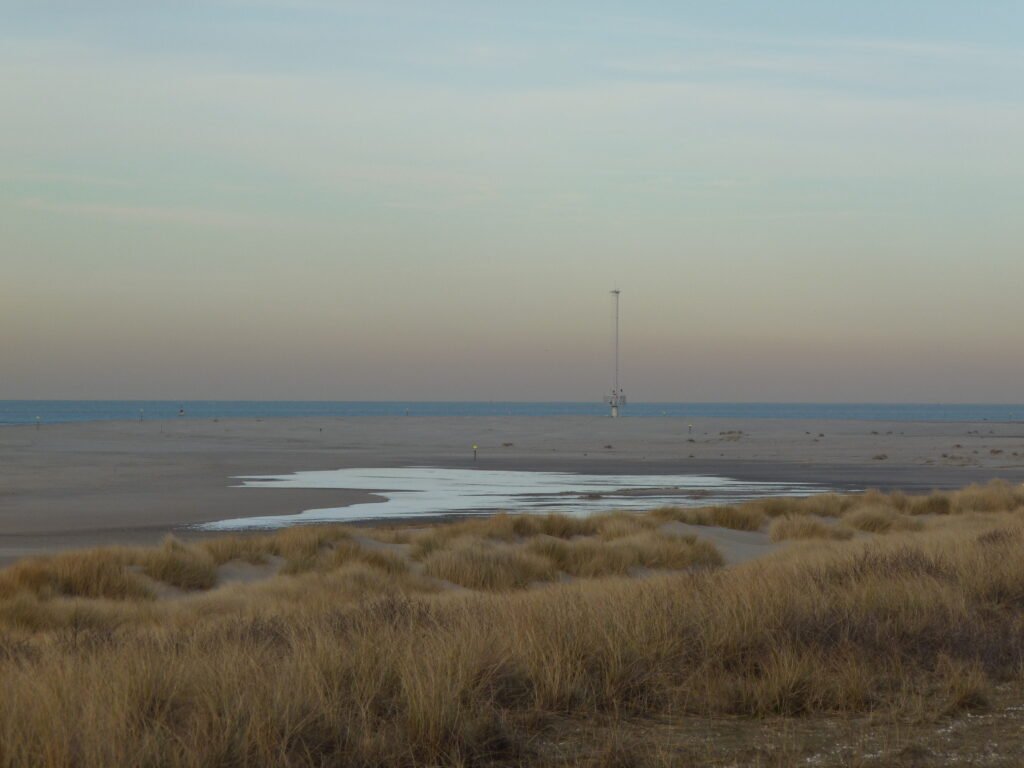
Fossil hunter Mirella Kenens from Wassenaar has discovered a pair of fused woolly mammoth bones on the Zandmotor near Monster. The find consists of sesamoid bones, which the extinct animal used to move its toes.
Paleontologist Dick Mol, who has a collection of roughly 50,000 fossil bones, called the find unique worldwide. Mol has acquired the specimens to study why the bones joined together, which could be the result of pressure or a genetic abnormality.
Artificial beach uncovers ice age fossils
Kenens has searched for prehistoric remains along the coast since 2018. Many of the items originate from the Late Pleistocene, an ice age era between 126,000 and 11,700 years ago when the North Sea was dry land known as Doggerland.
The artificial sand used to reinforce the coast at the Zandmotor exposes deep, older layers containing bones and teeth from extinct animals. In the past, Kenens has found mammoth skull pieces, a rare Notorynchus shark tooth, and part of a woolly rhinoceros upper arm bone.
Best conditions for beach searches
Finding such specimens requires patience and long walks, as searches often yield only a few fish vertebrae. Kenens notes that looking through shell banks during falling or low tide offers the best chance of spotting remains.
Strong easterly winds also improve conditions on the beach. The resulting currents help dislodge heavier materials from the seabed, washing them directly onto the sand.