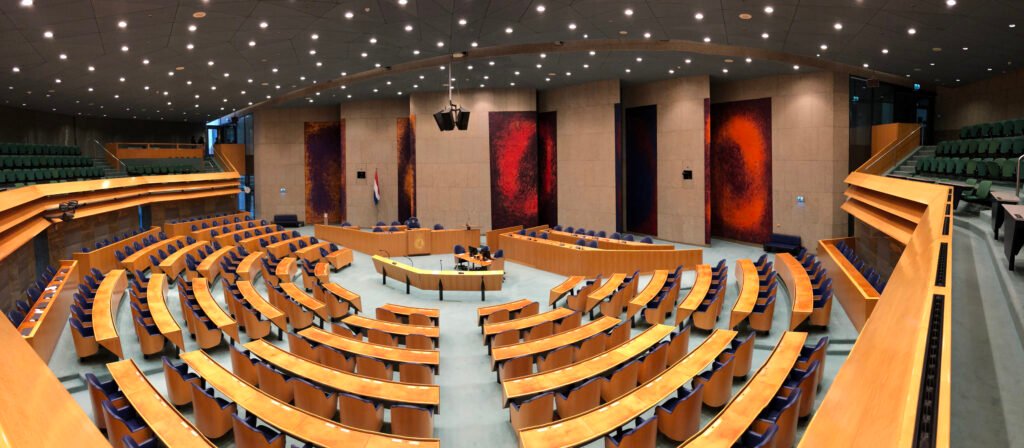
Around a quarter of questions submitted by members of the Dutch parliament were written with the help of artificial intelligence tools such as ChatGPT or Claude.
An analysis of 28,000 questions using the detection tool Pangram found that 26% showed stylistic features of AI.
Usage peaked at more than 30% immediately before the summer recess, before dropping to around 17% in July, roughly matching levels from a year earlier. While some politicians included only a sentence or two of generated text, others used tools to draft entire strings of questions.
Debate over democratic role
The findings follow scrutiny of prime minister Rob Jetten, who faced criticism after roughly 30% of his social media messages were found to contain AI-generated text. Jetten defended the practice, stating that he uses the technology to make things better like three-quarters of the Dutch population.
AI developer Maarten Sukel noted that using the tools becomes an issue if politicians rely on them instead of doing in-depth research on unfamiliar dossiers.
Opposition MP Daniël van den Berg argued that AI saves hours of searching through documents and minutes, allowing work to happen faster and smarter.
However, digital pioneer Marleen Stikker warned that relying on such tools in parliament undermines democracy by outsourcing the system to algorithms run by American companies.